
Read every signal with your context loaded.
How the cognitive layer composes.
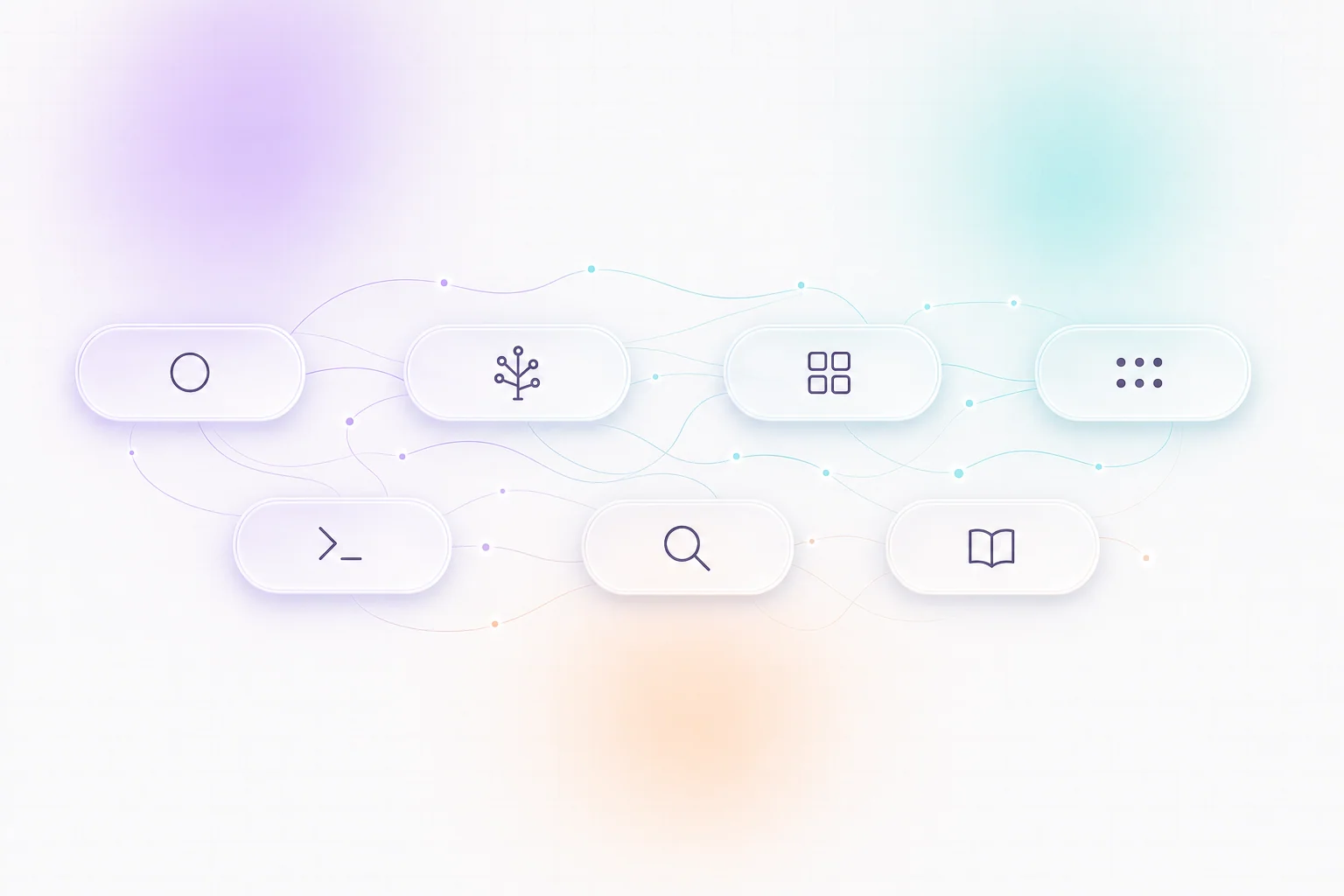
Seven capabilities working as one architecture — sensing every signal, applying your rules, acting under your governance, and leaving a chain of evidence behind.
From signal to evidenced action, in one governed layer.
A request lands in your inbox, a webhook fires, a sensor reads a value. The cognitive layer interprets it with the rules your team already runs by, routes it through workflows, hands sensitive moments to humans, and leaves a chain of evidence the auditor can trust. The same shape, every time.
Three roles. Seven capabilities. One architecture.
Each capability stands alone. Together they fall into three roles — sensing what comes in, deciding what to do about it, and proving what happened.
Orchestrate the work, run it 24/7, bring humans in when it matters.
Stay in charge — and prove every decision.
Architecture is what turns AI into operations.
Point automations don’t scale
Six experiments, six tools, six inboxes of context. Nothing composes, nothing carries the rules, nothing leaves audit-grade evidence. You stay manual exactly where it counts.
A cognitive layer is the opposite
Every signal arrives in the same place. Every decision applies the same rules. Every action leaves the same chain of evidence. New work composes with old work because they share the same architecture underneath.
That is what makes it deployable
Not the model, not the tool. The architecture that ties them together — and the discipline that keeps humans in the loop where it matters.